
 An AI agent just paid: now the real architecture problem begins
An AI agent just paid: now the real architecture problem begins
Moving money is only the last step. The hard part is proving who acted, for whom, under which mandate, and within which limits.
On July 24, 2026, Visa and Lianlian DigiTech announced a B2B purchase completed by LoopXPay: source, order, pay — in one workflow, under predefined spend controls.
The product story is autonomy. The architecture story is authority.
Calling a payment API is easy. Building a system where an agent can be identified, mandated, limited, revoked, and audited is the real work.
The shift that matters
AI recommends → Human decides → System executes
AI proposes    → System authorizes → System executes
That second path looks like progress. Without a trust boundary, it is just a probabilistic model with access to money.
A payment stack must now answer more than "who is the user?":
- which agent is acting?
- for which principal?
- under which mandate?
- within which limits?
- with what proof?
Intent in, money out
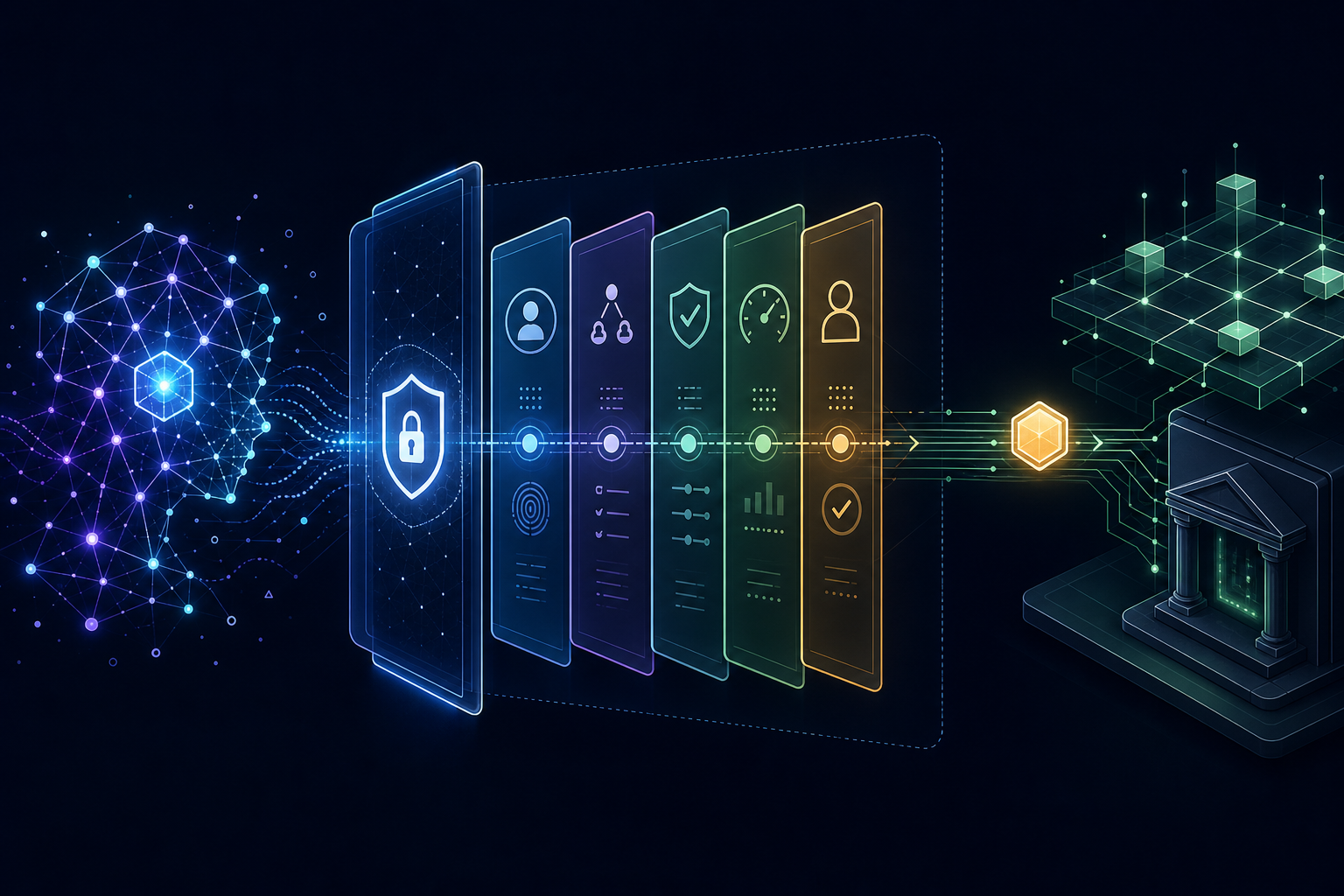
The agent should never call the rail directly. It should emit a structured payment intent. Deterministic infrastructure decides whether that intent is authorized.
Core contract:
The agent proposes. The system authorizes. Only then does money move.
What the trust layer must own
| Concern | Design rule |
|---|---|
| Identity | Agent ≠ principal. Short-lived credentials, immediate revocation. |
| Mandate | Specific, limited, time-bound, non-transferable, versioned. |
| Policy | Deterministic rules with reason codes — independent of the LLM. |
| Autonomy | Auto / review / block by risk — humans approve exceptions, not every payment. |
| Idempotency | Ten retries = one economic intent. Ambiguous PSP responses → status check, never a new debit. |
| Audit | Decision lineage: principal → agent → mandate → policy → payment → ledger. |
Handing an agent the CFO's bank credentials is not delegation. It deletes the boundary you will need in the dispute, the audit, and the incident review.
Where this gets hard in Africa
Multi-rail stacks — banks, mobile money, wallets, instant payments — make agent procurement powerful. They also multiply failure modes: rail switches, incomplete callbacks, and statuses that are not interchangeable (SUCCESS ≠ SETTLED).
The hard problem is not whether an LLM can orchestrate the steps. It is whether the infrastructure can absorb retries, timeouts, and bad judgments without turning autonomy into financial risk.
Bottom line
The next competitive layer in payments is not a smarter model. It is a trust layer between intelligence that wants to act and rails that move cash.
AI can decide a payment is necessary. It should never decide alone that it is authorized.
Would you hand an agent a budget today — and how narrow would its mandate be?